Web directories have a mixed reputation, and a lot of it is deserved. For years, "submit your site to 500 directories" was sold as an SEO shortcut, and the result was a sea of junk listing sites that exist only to host links nobody reads. But the original idea behind a directory — a human-organized index of sites grouped by topic — is genuinely useful, and a small number of directories still do real work for discovery. The skill is telling the two apart.
The short version: treat directories as a discovery and listing tool, not a link-building-at-scale tactic. A handful of relevant, moderated directories that real people use are worth more than a thousand auto-approve ones — and the junk ones aren't just useless, they can associate your site with spam. This guide explains what directories are good for today, how to evaluate one, and how to get listed without wasting your effort.
What a web directory actually is
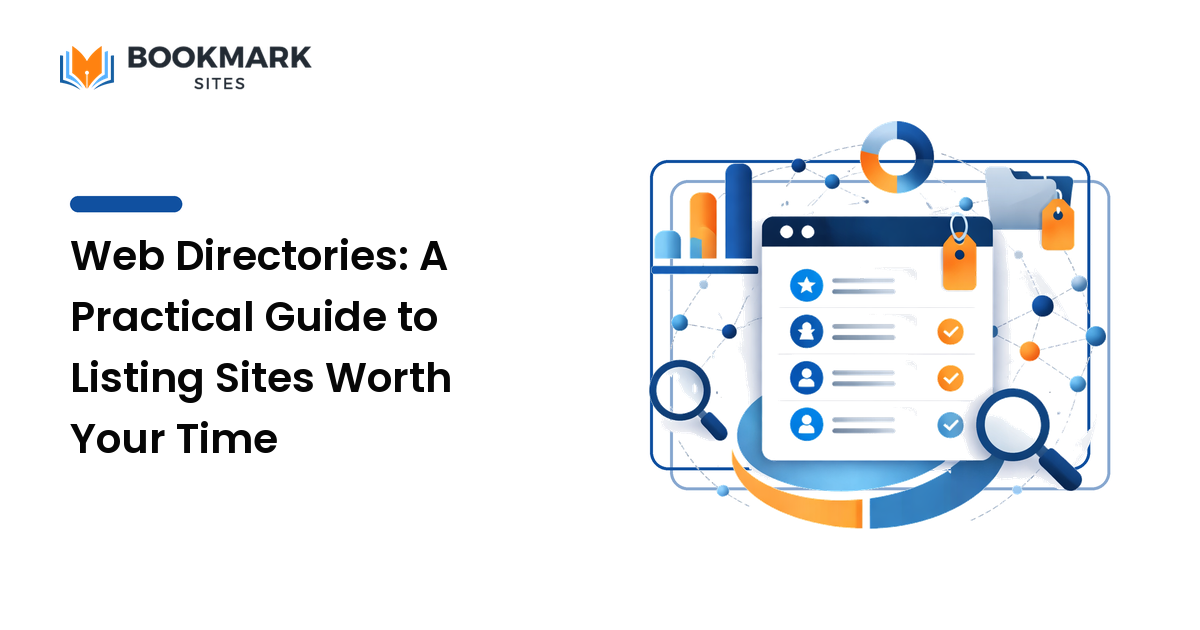
A web directory is a curated list of websites organized into categories — the way people navigated the early web before search engines took over. You find a category, browse the sites listed under it, and click through. Getting "listed" means submitting your site to the relevant category with a title, URL, and short description.
That's different from a search engine, which crawls everything automatically, and different from social bookmarking, where individuals save and share specific pages. A directory is a deliberate, human-organized index of sites. The social bookmarking guide covers the page-saving side; directories are about the site-level listing.
What directories are good for today
Be clear-eyed about the value, because it's narrower than the old hype claimed. Directories still do three honest jobs:
- Niche discovery. A respected directory in a specific field puts your site in front of people actively browsing that topic. A good industry directory can send small but genuinely interested traffic.
- A credibility signal. Being listed in a well-known, selective directory is a modest trust marker — it shows a human vetted you and let you in.
- For local businesses, citations. Consistent listings in reputable local directories help confirm a business is real and where it says it is. This is the one area where directories still do measurable work.
What's gone is bulk authority. Mass-submitting to general directories does nothing useful, and done aggressively it looks like exactly the manipulation it is. If a directory's whole pitch is "high-authority backlinks," that's a signal to walk away.
How to tell a useful directory from a link farm
This is where the whole exercise succeeds or fails. Before listing anywhere, judge a directory on four things:
Relevance
Is the directory about your topic, industry, or region? A niche directory in your field is worth ten generic "add any site" ones. Relevance is the single best predictor of whether a listing does anything at all.
Moderation
Does a human review submissions? Directories that auto-approve everything are, by definition, full of spam — and a listing alongside spam associates you with it. Selective directories are harder to get into, which is precisely why they're worth more.
Real audience and indexation
Does the directory itself get visited and show up in search? Check whether its pages are indexed and whether it has any visible audience. A directory nobody visits and search engines ignore can't send you discovery or referral value, no matter what it promises.
Honest framing
A reputable directory describes itself as a useful index for people. A link farm describes itself as an SEO tool and leads with "dofollow," "high DA," and link counts. That language targets manipulators — and you don't want your site sitting in that neighborhood.
If a directory fails two or more of these, skip it. There's no volume of bad listings that adds up to a good outcome.
How to get listed the right way
Once you've found directories worth your time, a little care makes each listing count:
- Shortlist, don't spray. Aim for a small set of relevant, moderated directories — plus the major local-citation sources if you're a local business — rather than hundreds of generic ones.
- Pick the right category. List under the most specific, accurate category. A precise placement helps the right people find you and shows you actually read the directory.
- Write a unique, honest description. Never paste the same blurb everywhere. Lead with what you do and who you serve, in plain language. A clear description earns clicks; a keyword-stuffed one earns rejection.
- Keep your details consistent. Use the same business name, URL, and (for local) address and phone across every listing. Inconsistent details confuse both people and search engines, and for local SEO they actively hurt.
- Pace your submissions. Spread them over time rather than blasting fifty in an afternoon from a tool. Slow and genuine beats fast and spammy every time.
- Keep a simple log. Record each directory, the category, the URL, and the date, so you can check later whether it was worth it.
How to know it was worth it
Don't list on faith — check whether each directory actually delivers:
- Referral traffic. Is the directory sending any real, engaged visitors? The good ones show up in your analytics; the rest don't.
- Indexation. Are the listing pages crawled and findable, or buried where nobody (human or crawler) will see them?
- Accuracy over time. For local listings especially, re-check periodically that your details are still correct and the listing is still live.
If a directory sends no traffic, isn't indexed, and offers only a buried link on a page nobody visits, stop using it and put the effort somewhere better.
FAQ
Are web directories still worth it?
A few are — the relevant, moderated, genuinely visited ones, especially niche directories and local-citation sources. The old tactic of mass-submitting to hundreds of general directories is not; it adds effort and risk without real benefit.
Do directory listings help SEO?
Mostly indirectly. The honest benefits are niche discovery, a modest credibility signal, and — for local businesses — citation consistency. Treat directories as a discovery and listing tool, not a ranking shortcut, and be wary of any that sell themselves purely as backlink sources.
How do I spot a low-quality directory?
Watch for auto-approval (no human review), pages that aren't indexed or visited, sprawling irrelevant categories, and marketing that leads with "dofollow high-DA links." Any of those means the directory exists for link-dropping, not for people — skip it.
How many directories should I submit to?
Quality over quantity. A short, scored shortlist of relevant, moderated directories — plus the key local-citation sources if you serve a local area — beats hundreds of generic ones. If a listing won't reach a real audience, it isn't worth the time.
What's the difference between a web directory and social bookmarking?
A web directory is a human-organized index of whole sites by category, submitted once. Social bookmarking is individuals saving and sharing specific pages, often with tags and notes. Directories lean toward listings and discovery of sites; bookmarking leans toward saving and resurfacing pages.
Next step
Skip the mass-submission temptation entirely. Build a short shortlist of directories that are relevant to your topic, actually moderated, and genuinely visited — add the main local-citation sources if you're a local business. Write a unique, honest listing for each, keep your details consistent, and log what you submit. Then watch which ones send real visitors, and keep only those. A few good directory listings beat a thousand junk ones every time.